🚀
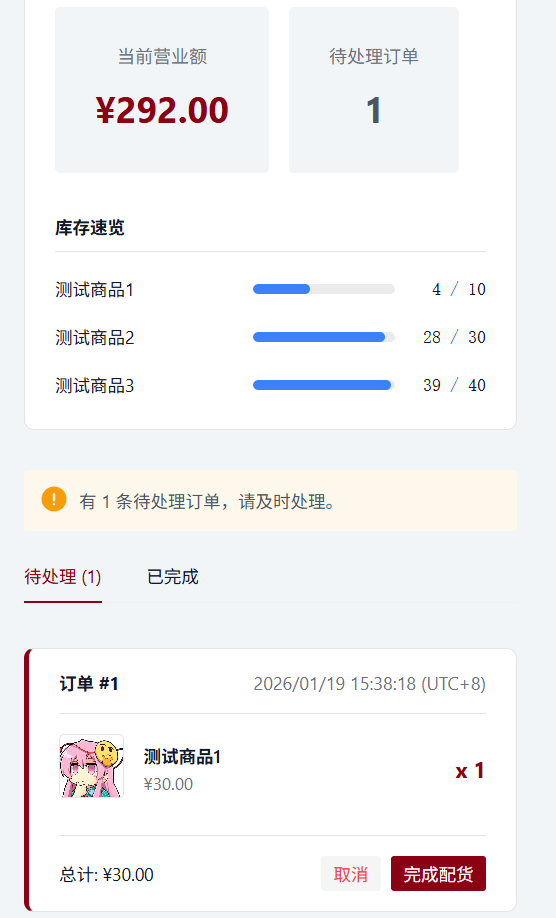
Fast checkout on the vendor's phone
Pick items from the same catalog and get the same bundle deals as the customer view. Confirm payment and complete the order directly, with one-tap access to payment QR codes and no need to switch views.
No internet needed · Minimal workflow · Ready out of the box

⭐ Open source: auditable, reusable, hackable
The project is 100% open source (MIT License). Read the code, file issues, send PRs, or fork it and adapt it for your own circle.
From prototype website to a complete booth app
Taking over a doujin club during summer, we faced messy inventory and paper-based bookkeeping — inspiring an automated tool.
Built a Flask + Vue prototype and deployed to a cloud server. It validated the workflow but hit a heavy network dependency wall.
Tried shipping the Python backend as a packaged app. Size bloat and runtime deps made it hard to run on regular member devices; laptops were inconvenient to carry.
Rewrote the backend in Rust, built with Tauri v2. Achieved high performance, zero external deps, and fully offline on Windows/Android.
Rewrote the ledger with double-entry bookkeeping — every item and every yuan has a source and a destination. Added bundle deals, closing & consignment settlement, and barcode scanning, and redesigned the Admin console and Vendor view around the event lifecycle.
We tried many approaches running a fan club booth and hit these pitfalls.
v1.2 rewrote the ledger: every item and every yuan has a source and a destination.
Bundle deals, refunds, closing stocktake and consignment settlement are all built on top of it.
"Any 3 cards for ¥20", "New book + standee for ¥50" — the cart works out the cheapest combination and shows how much the customer saved.
Recount orders → Stocktake → Take back → Settle. How much each circle gets and how much you owe whom, all at a glance.
Scan barcodes continuously with the camera, or just plug in a barcode scanner. Works with retail barcodes and your own number labels, fully offline.
The Event workbench is grouped into Pre-event / On-site / Closing; "Import from previous event" carries over products and bundles in one go.
Point the camera at an item, take a photo, and it's recognized and added to the cart.
No barcode stickers, no SKUs to memorize.
Doujin goods come in small runs and lineups change often; stickering every item is tedious and ugly. The product photo itself becomes the "label".
Don't know your friend's products? No problem — one photo gives you the name, price and stock. Zero learning curve.
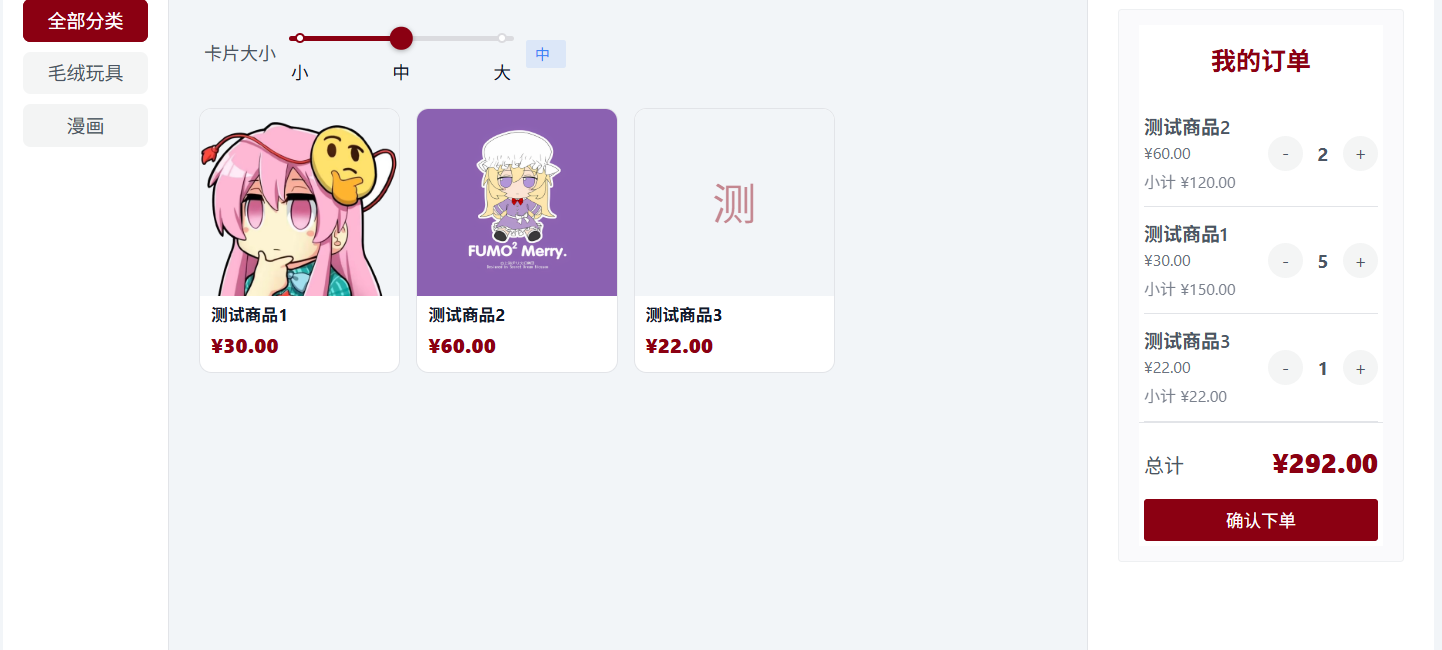
Put a tablet at the front of the booth: customers snap, add to cart and pay by QR code themselves. You just collect the money.
Once the model is downloaded, inference runs fully offline. The desktop app supports DirectML GPU acceleration; Android runs on CPU.
Booth-Kernel centers on local data + LAN synchronization: enable phone hotspot, connect devices, and collaborate — rock solid even offline.
No internet needed. Turn on phone hotspot (no data usage) → connect devices → sync instantly.
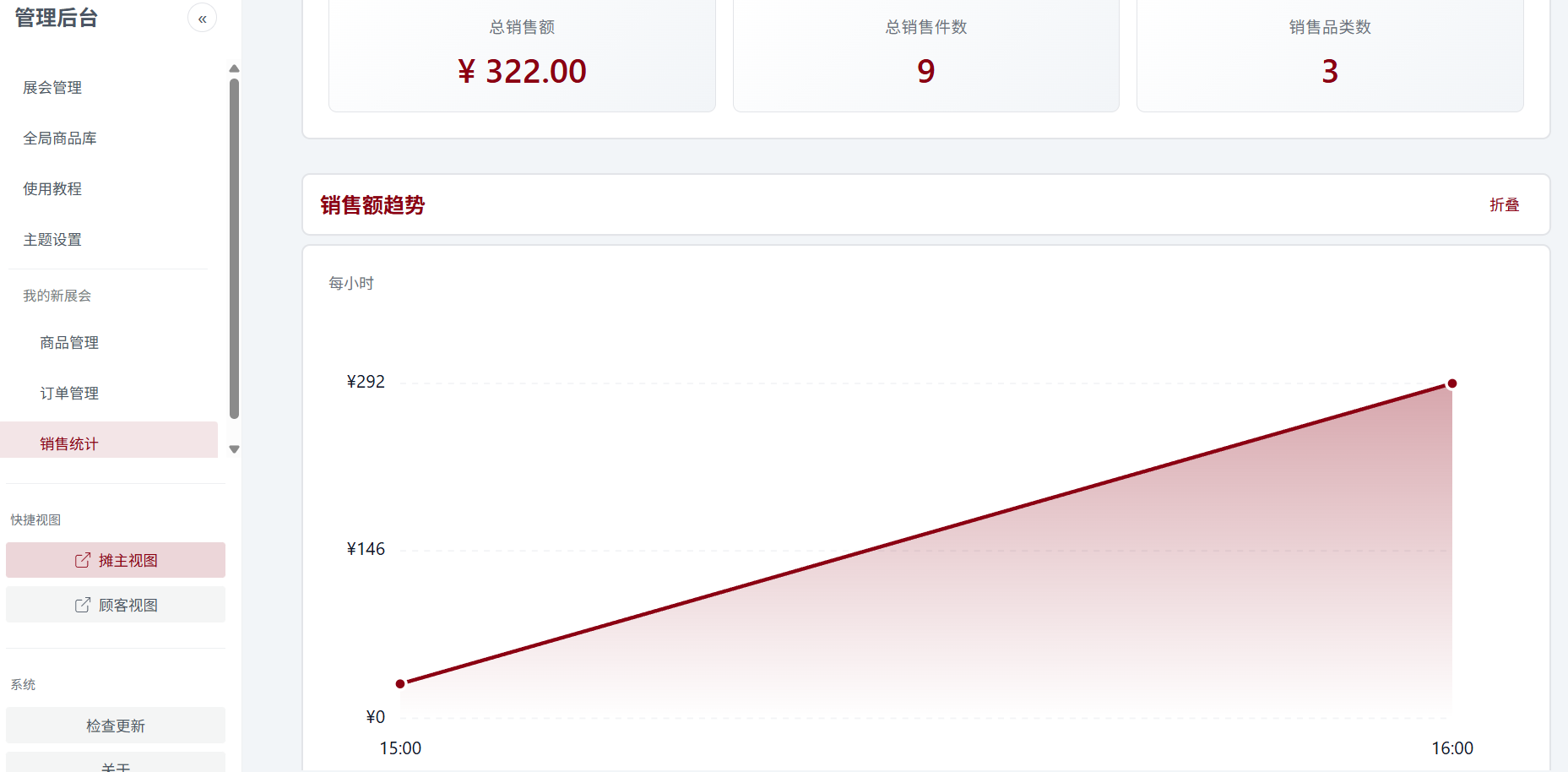
Order → Confirm → Fulfill; the system automatically deducts stock, logs sales, and generates reports.
Tablet as "digital menu": big images, clear pricing, quick ordering — less friction and crowding.
No centralized cloud. Data stays on your devices, with one-click Excel export for review.
Two devices are enough for a full workflow; multiple tablets/phones scale easily.
Two landscape shots (customer/statistics) and one portrait (vendor).
Let the system handle the tedious parts — keep the passion for fans.